Why Leave a Big 4 Accounting Firm? Finding Your Path in 2026

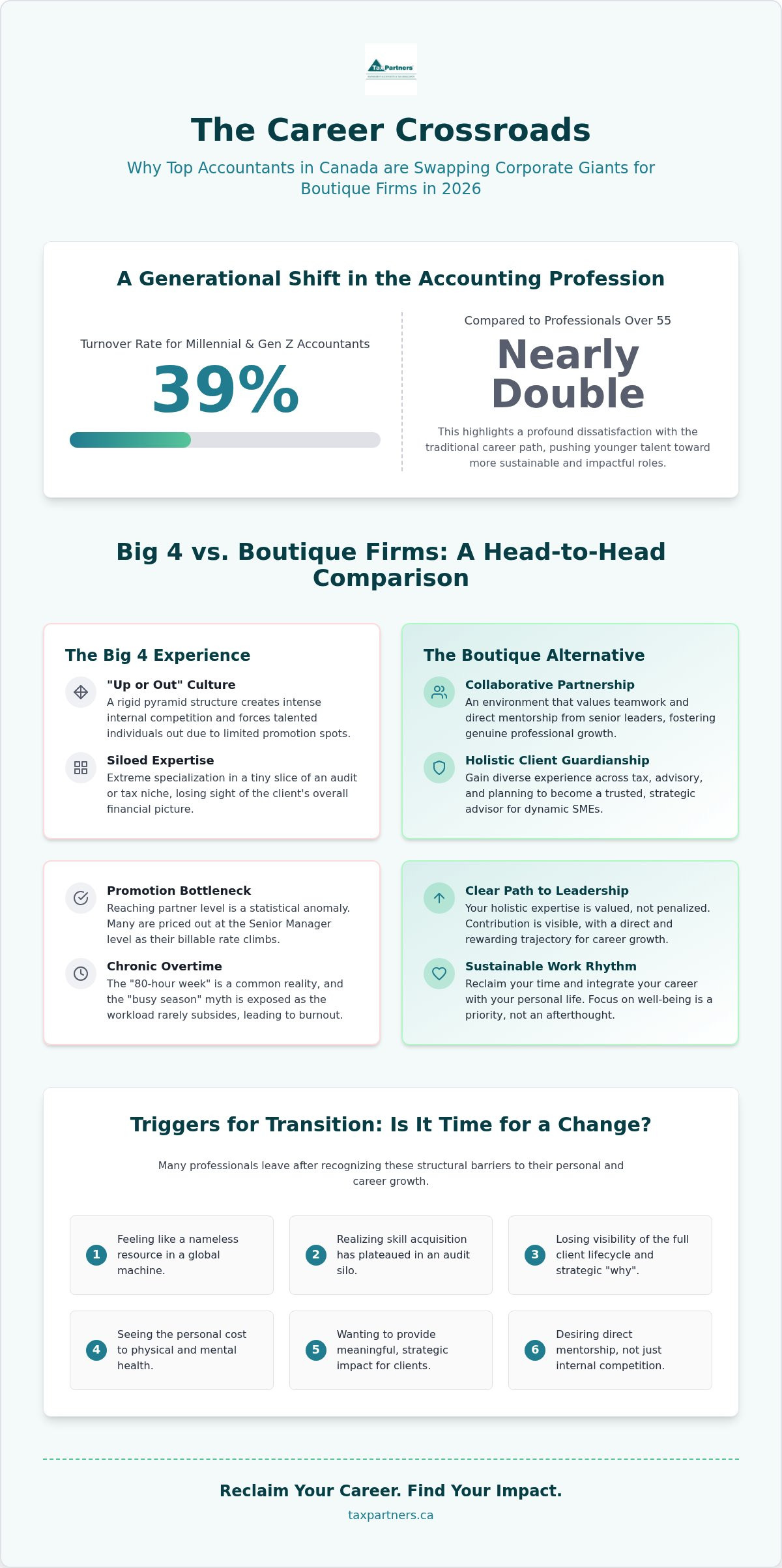
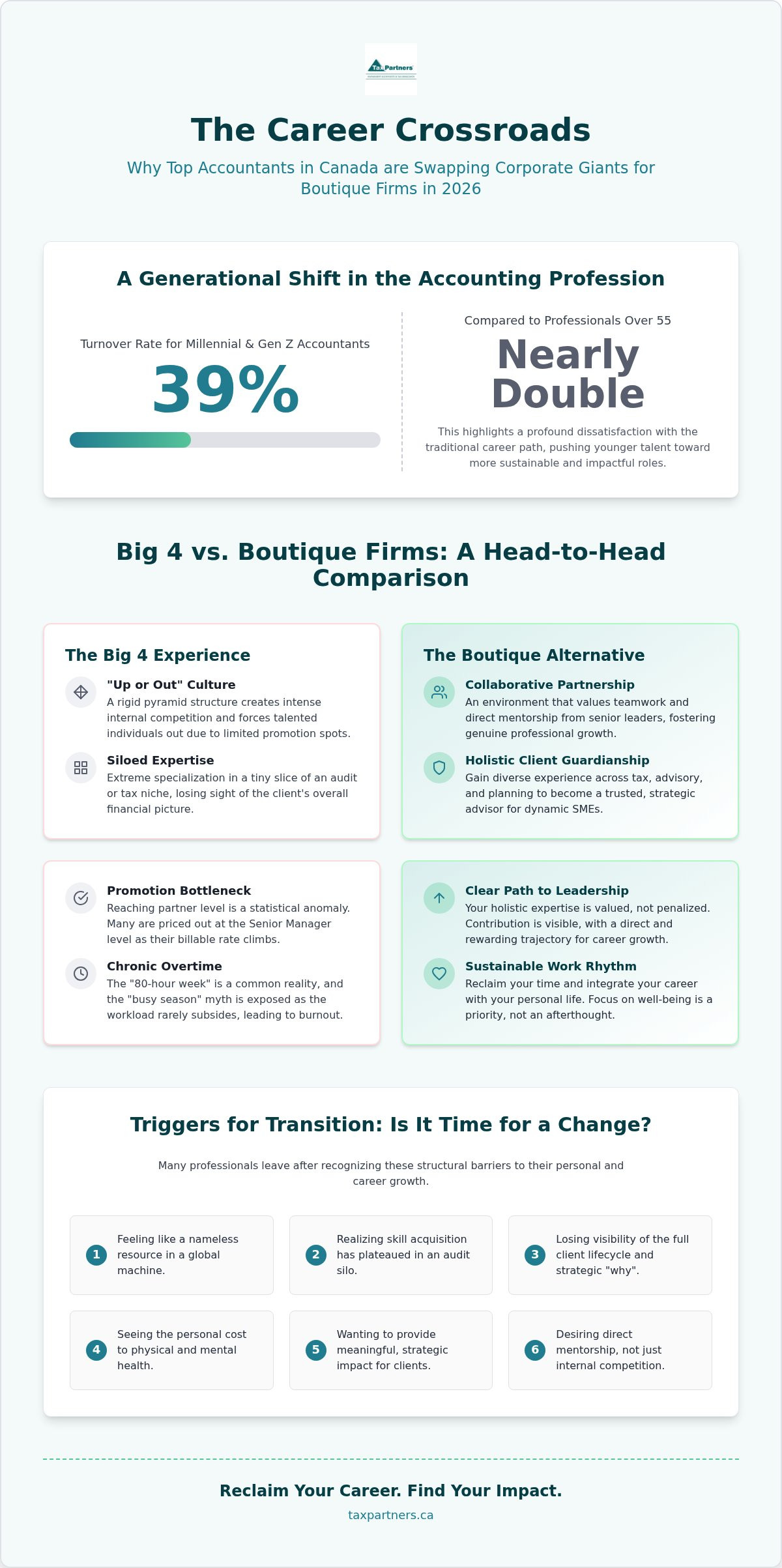
Did you know the turnover rate for Millennial and Gen Z accountants has reached 39 per cent, nearly double that of professionals over 55? This striking figure highlights the growing number of professionals asking why leave a big 4 accounting firm to find a more sustainable career path. You've likely felt the weight of chronic overtime and the frustration of being treated as a nameless resource in a global machine.
It's understandable to value the prestige of a global brand while simultaneously craving the mentorship and strategic involvement that often disappears during peak audit seasons. You shouldn't have to sacrifice your personal well-being to achieve professional excellence. We'll show you how transitioning to a boutique firm allows you to reclaim your time while increasing your impact as a proactive guardian for your clients.
This guide explores the shifting landscape of the Canadian accounting profession in 2026 and the new pathways to leadership that don't require 80-hour weeks. We'll examine how smaller, specialized firms prioritize meaningful relationships and offer a clear, rewarding trajectory for your career growth.
Key Takeaways
- Understand the structural pressures of the "up or out" culture that drive high-performers toward more sustainable boutique environments.
- Learn how shifting your focus from Fortune 500 entities to dynamic SMEs allows you to provide more meaningful, strategic client impact.
- Discover the specific professional and personal triggers that help you determine why leave a big 4 accounting firm to reclaim your time and strategic focus.
- Explore how boutique firms foster direct mentorship and collaborative partnerships that are often absent in large-scale global machines.
- Gain a practical framework for assessing a firm's technology stack and mission to ensure a seamless transition into a leadership role.
The Big 4 Burnout: Why Talent is Moving On in 2026
The Big Four accounting firms, consisting of Deloitte, PwC, EY, and KPMG, have long served as the ultimate proving ground for ambitious CPAs. For decades, the trade-off was clear: you traded your time and autonomy for a prestigious name on your resume.
In 2026, the equation has shifted. Many professionals now wonder why leave a big 4 accounting firm when the path to partner feels increasingly narrow and the personal costs continue to climb.
This shift is driven largely by the "Up or Out" culture. This rigid pyramid structure requires a constant churn of junior staff to support a handful of partners at the top.
While this model generates high revenue, it often forces talented individuals out simply because there isn't room for everyone to advance. It creates an environment of internal competition rather than the collaborative mentorship that modern professionals crave.
Extreme specialization also plays a significant role in professional dissatisfaction. In these massive organizations, you often become an expert in a single, tiny slice of a Fortune 500 audit or a specific tax niche under CRA rules.
You lose sight of the full client lifecycle and the bigger financial picture. You miss the chance to be a strategic mentor who helps a business grow from the ground up.
The Diminishing Returns of Prestige
The brand name carries significant weight during your first three years. It signals to the market that you've survived a rigorous, high-pressure environment.
After that point, the returns begin to diminish. You might find that your actual skill acquisition has plateaued in an audit silo while your peers in boutique firms are gaining diverse experience across tax, advisory, and complex financial planning.
The Health and Wellness Equation
The toll of 80-hour weeks is no longer a badge of honour. Recent data from Lauber Business Partners shows that the turnover rate for Millennial and Gen Z accountants has reached 39 per cent in 2026.
This is nearly double the rate of older generations. Professionals are realizing that the answer to why leave a big 4 accounting firm is often found in their physical and mental health.
The "busy season" myth has also been exposed. In our globalized economy, the workload rarely subsides, leading many to seek a sustainable rhythm that integrates their career with their personal life.
Structural Barriers to Career Growth in Large Firms
Beyond the exhaustion mentioned in previous sections, many professionals realize that the very structure of a global network limits their long-term potential. You might feel like a cog in a massive machine, where your visibility into the full client lifecycle is obscured by layers of management. This lack of transparency is a core reason why leave a big 4 accounting firm to seek a more integrated role.
Internal competition often replaces genuine collaboration in these environments. Peer-ranking systems can create a culture where protecting your own metrics matters more than the client's ultimate success. This environment often discourages senior staff from mentoring juniors, as everyone is fighting for the same limited promotion spots.
Junior and mid-level staff rarely see the strategic "why" behind the work they perform. You might process thousands of lines of data without ever meeting the business owner or understanding their vision. This disconnect makes the work feel repetitive and transactional rather than meaningful or fulfilling.
Senior Managers face a unique challenge as they become more expensive to the firm. You risk pricing yourself out of the market if your expertise remains narrow while your billable rate climbs. If you're ready to move beyond these limitations, it might be time to speak with a firm that values holistic expertise.
Siloed Expertise vs. Holistic Planning
Large firms typically separate compliance work from high-level advisory services to maximize efficiency. This means you might spend years filing returns without ever discussing a client's long-term wealth goals. For Canadian SMEs, this fragmented approach is ineffective. They need a proactive guardian who understands their entire financial picture, from payroll to cross-border compliance. Understanding why leave a big 4 accounting firm often involves looking at how these structural barriers prevent you from becoming the well-rounded professional you envisioned.
The Promotion Bottleneck
Reaching the partner level is often a statistical anomaly rather than a guaranteed reward for hard work. Internal politics and the "waiting for a seat" mentality often outweigh technical merit or client satisfaction. You have little autonomy in choosing which clients to serve or how to define your own service standards. Moving to a boutique environment often provides a clearer, merit-based path to leadership where your individual contribution is recognized and rewarded.
- Lack of direct client interaction prevents you from becoming a trusted advisor.
- Peer-ranking systems can stifle the professional development of junior staff.
- Compliance is often separated from high-level advisory, limiting your professional skill set.
Big 4 vs. Boutique CPA Firms: A Comparison
Choosing between a global network and a specialized boutique firm often comes down to the type of impact you want to make. While the Big 4 serve massive Fortune 500 corporations, boutique firms focus on dynamic small and medium-sized enterprises (SMEs) and high-net-worth individuals. This fundamental difference in client base is a compelling reason why leave a big 4 accounting firm. You move from auditing a small piece of a global conglomerate to managing the entire financial health of a growing business.
Boutique firms transform you into a strategic mentor. You aren't just filing forms; you're helping a business owner decide whether to expand into a new province or how to structure a family trust. This role requires a broad understanding of both corporate and personal tax, offering a level of professional variety that is rarely found in the highly siloed departments of a global firm.
Flexibility and speed are also significant advantages in a smaller setting. Boutique firms can pivot quickly when the CRA announces new tax regulations or when shifts occur in international treaties. You won't be slowed down by layers of global bureaucracy when a client needs an immediate answer on a complex transaction. This agility allows you to provide a higher level of service while maintaining a sustainable work-life integration.
Client Impact and Proactive Guardianship
There is a profound sense of satisfaction in seeing a client save significant capital because of your direct, personalized advice. Whether you're identifying a new tax credit under CRA rules or optimizing a corporate structure, your work has a visible, immediate effect on real people. We define proactive guardianship as the core of boutique service; it's the act of anticipating regulatory shifts and financial risks before they become problems for the families and businesses we serve. This approach moves you from a reactive compliance mindset into a role of long-term partnership and trust.
Technical Complexity in a Smaller Setting
A common misconception is that leaving a large firm means sacrificing technical challenge. In reality, boutique firms often handle incredibly intricate files, particularly regarding cross-border compliance. You might navigate the complexities of a client with dual residency, ensuring they meet all obligations for both the CRA in Canada and the IRS in the United States. This work requires a deep, nuanced understanding of tax law that goes far beyond basic return preparation. To better understand these differences, you can read more about Why Choose a Boutique CPA Firm Over a Big Four Firm? on our site.
Strategic Considerations for Your Transition
Deciding why leave a big 4 accounting firm is only the first step in your professional evolution. You must now evaluate potential firms with the same rigour you apply to a complex cross-border audit. Look past the generic "About Us" page and investigate whether their mission aligns with your desire for strategic impact and genuine work-life integration.
A firm's technology stack reveals their commitment to your daily productivity. In 2026, you shouldn't settle for legacy systems that keep you chained to a desk during peak seasons. Modern cloud accounting and AI integration are essential tools that allow you to focus on high-level advisory work rather than manual data entry for CRA filings.
Mentorship is the true currency of a boutique environment. Ensure you'll have direct, daily access to experienced partners who are deeply invested in your success. Review their client portfolio to confirm it includes sectors that excite you, whether that involves dynamic Canadian SMEs or specialized international tax compliance. If you're ready to find a firm that prioritizes your growth and well-being, reach out to us today to explore your options.
Questions to Ask During Your Interview
Interviews are a two-way street; use them to verify the firm's operational health. You need to know how they protect their team from the burnout you've already experienced. Consider asking these targeted questions:
- How does the firm handle workload distribution during peak tax seasons for CRA filers?
- What does the path to leadership look like for a high-performing CPA who values autonomy?
- How does the firm stay ahead of emerging sectors like cryptocurrency tax and global digital service regulations?
Red Flags to Watch For
Be wary of boutique firms that mimic the Big 4 "grind" without providing the global resources or prestige. If a firm lacks investment in continuing education or professional certification, they aren't prioritizing your long-term growth. High turnover rates within the firm are often a sign that the culture hasn't evolved past the survival mode you're trying to escape. A firm that cannot articulate its vision for the next five years is unlikely to provide the stability you need for a long-term partnership.
The Tax Partners Alternative: Reclaiming Your Career
Tax Partners serves as a premier destination for professionals who have realized why leave a big 4 accounting firm to seek a more fulfilling career path. We don't just offer a different office; we provide a platform where your technical expertise is leveraged to create genuine client impact. Our 40-year legacy of excellence in Canadian and cross-border tax provides the stable foundation you need to thrive without the 80-hour work weeks.
Our "Steady Hand" philosophy combines decades of institutional wisdom with the modern agility necessary for 2026. We move away from the "up or out" model to focus on long-term partnership and professional maturity. You'll find yourself empowered to act as an authoritative mentor, guiding clients through complex financial transitions with confidence and clarity.
We prioritize a culture where you can actually see the results of your work in real-time. Instead of being lost in a global network, you'll manage the full client lifecycle for dynamic SMEs and high-net-worth individuals. This holistic approach ensures you remain engaged and challenged while maintaining a sustainable professional rhythm.
A Culture of Reliability and Reassurance
We aim to alleviate the stress often associated with complex regulatory matters through precision and foresight. Our firm values ethical steadfastness and long-term stability over the short-sighted quarterly metrics that often drive larger institutions. You can learn about our Mission and Vision to see how we've built a practice around being proactive guardians for our clients' wealth.
Our environment encourages you to look ahead rather than just reacting to deadlines. We provide the tools and support necessary to ensure every client file is handled with meticulous care and strategic intent. This focus on quality over quantity allows our team to take pride in their work while avoiding the burnout typical of the Big 4 environment.
Joining a Team of Proactive Guardians
You'll have the opportunity to specialize in sophisticated areas like estate planning and global tax strategy. We are particularly known for our expertise in supporting dual citizens and expats who must navigate their unique obligations under both IRS rules in the United States and CRA regulations in Canada. This cross-border focus requires a high degree of competence and provides a rewarding challenge for those seeking to escape audit silos.
We treat our team members as proactive guardians who secure better outcomes for the families and businesses we serve. You'll have the autonomy to define your service standards and the mentorship to reach your highest professional potential. Ready for a change? Contact Tax Partners today to discuss your future and start your journey toward a more balanced, impactful career.
Secure Your Future in Strategic Accounting
Reclaiming your career means moving beyond the burnout and silos of global networks to find a role that values your time and expertise. You've explored the structural barriers of large firms and the specific reasons why leave a big 4 accounting firm to embrace a more integrated, strategic path. By transitioning to a boutique environment, you gain the autonomy to become a proactive guardian for your clients rather than a nameless resource.
Tax Partners offers a unique blend of boutique service with a global reach, providing a steady hand for complex Canadian and cross-border tax matters. Our team has filed more than 495,000 returns since 1981, earning over 1,390 five-star Google reviews through a commitment to excellence. We invite you to step into a leadership role where your individual contribution is recognized and your personal well-being is prioritized.
Your path to a more sustainable and rewarding professional life is within reach. Discover a more fulfilling accounting career at Tax Partners today. It's time to build a future where you can truly thrive.
Frequently Asked Questions
Will leaving the Big 4 hurt my long-term career prospects in Canada?
Leaving a large network rarely hinders your prospects in the Canadian market; instead, it often broadens your professional appeal. While the Big 4 brand is valuable, boutique firms allow you to develop holistic expertise that is highly prized by SMEs and private equity. You transition from a niche specialist to a well-rounded advisor who understands the full financial picture for Canadian business owners.
Is the salary comparable when moving from a Big 4 firm to a boutique firm?
Salaries at boutique firms are increasingly competitive, particularly when you factor in performance-based bonuses and profit-sharing models. Large firms often have high overhead costs that limit individual compensation growth at the mid-to-senior levels. In a smaller setting, your direct impact on the firm's success is more visible, which can lead to a more lucrative and rewarding long-term financial path.
How do I explain my departure from a Big 4 firm to future employers?
Frame your decision as a proactive step toward deeper client engagement and strategic mentorship. Explain that you've gained foundational technical skills and are now seeking an environment where you can act as a proactive guardian for clients. Highlighting your desire to see the full lifecycle of a business rather than just a siloed audit section demonstrates professional maturity and a clear vision for your career growth.
Do boutique firms handle complex cross-border tax issues for CRA and IRS filers?
Specialized boutique firms frequently handle intricate cross-border matters for both CRA filers in Canada and IRS filers in the United States. At Tax Partners, we focus specifically on the complexities of dual residency and international corporate structures. Our team provides the same level of technical precision as a global firm but with a more personalized, responsive approach that ensures compliance across multiple jurisdictions.
What is the best time of year to leave a Big 4 firm?
The ideal time to transition is typically right after the spring busy season or following your annual bonus distribution. Leaving at this point allows you to finish your current commitments professionally while giving you the summer to integrate into a new firm's culture. This timing ensures you are well-positioned to take on strategic projects before the next major filing deadlines for Canadian corporate tax returns.
Can I still reach Partner status if I move to a smaller accounting firm?
Reaching Partner status is often more attainable and faster in a boutique environment than in a massive global hierarchy. Smaller firms value technical merit and client development over internal politics or rigid years-in-grade requirements. If you demonstrate a commitment to excellence and a talent for mentorship, your path to leadership is much more transparent and less dependent on the statistical bottlenecks found in larger organizations.
Will I have better work-life balance at a firm like Tax Partners?
You will likely find a significantly better balance at a firm that prioritizes long-term stability over volume-based metrics. This is a primary reason why leave a big 4 accounting firm; you move from a culture of survival to one of thriving. Firms like Tax Partners utilize modern cloud technology to streamline workflows, allowing our team to deliver exceptional results for clients without sacrificing their personal lives.
What skills should I focus on developing before I leave the Big 4?
Focus on developing your soft skills and your ability to translate complex technical data into actionable advice for business owners. While technical precision remains vital, your value in a boutique setting comes from your role as a strategic mentor. Enhancing your understanding of diverse areas like estate planning or cryptocurrency tax will also prepare you for the varied challenges of serving dynamic SMEs under modern CRA regulations.

Article by
Mahad Mohamed
Mahad Mohamed is an accountant and the CEO of Tax Partners, with over 26+ years of Canadian and international tax and accounting experience. His expertise includes corporate reorganization, cross-border tax structuring (Canada & US), tax disputes, CRA audits, and tax planning for small owner-managed private corporations. Most recently, Mahad is a pioneer in Canadian crypto taxation and founded Block3 Finance.
Previously, Mahad worked for the Canada Revenue Agency (CRA), Big4 accounting firms, and served as a Rulings Officer for the Federal Tax Authority of the UAE before acquiring Tax Partners in 2014.
Tax Partners has 44 full-time accountants and over 18,400+ clients.
Disclaimer
This article provides general information only and is current as of its publication date. It has not been updated and may be out of date. It does not constitute legal advice and should not be relied upon as such. Every tax situation is unique and may differ from the examples discussed in this article. If you have specific questions, you should seek the advice of our accountants for your unique circumstances. Book a FREE Initial Consultation Today!
Frequently Asked Questions
Will leaving the Big 4 hurt my long-term career prospects in Canada?
Leaving a large network rarely hinders your prospects in the Canadian market; instead, it often broadens your professional appeal. While the Big 4 brand is valuable, boutique firms allow you to develop holistic expertise that is highly prized by SMEs and private equity. You transition from a niche specialist to a well-rounded advisor who understands the full financial picture for Canadian business owners.
Is the salary comparable when moving from a Big 4 firm to a boutique firm?
Salaries at boutique firms are increasingly competitive, particularly when you factor in performance-based bonuses and profit-sharing models. Large firms often have high overhead costs that limit individual compensation growth at the mid-to-senior levels. In a smaller setting, your direct impact on the firm's success is more visible, which can lead to a more lucrative and rewarding long-term financial path.
How do I explain my departure from a Big 4 firm to future employers?
Frame your decision as a proactive step toward deeper client engagement and strategic mentorship. Explain that you've gained foundational technical skills and are now seeking an environment where you can act as a proactive guardian for clients. Highlighting your desire to see the full lifecycle of a business rather than just a siloed audit section demonstrates professional maturity and a clear vision for your career growth.
Do boutique firms handle complex cross-border tax issues for CRA and IRS filers?
Specialized boutique firms frequently handle intricate cross-border matters for both CRA filers in Canada and IRS filers in the United States. At Tax Partners, we focus specifically on the complexities of dual residency and international corporate structures. Our team provides the same level of technical precision as a global firm but with a more personalized, responsive approach that ensures compliance across multiple jurisdictions.
What is the best time of year to leave a Big 4 firm?
The ideal time to transition is typically right after the spring busy season or following your annual bonus distribution. Leaving at this point allows you to finish your current commitments professionally while giving you the summer to integrate into a new firm's culture. This timing ensures you are well-positioned to take on strategic projects before the next major filing deadlines for Canadian corporate tax returns.
Can I still reach Partner status if I move to a smaller accounting firm?
Reaching Partner status is often more attainable and faster in a boutique environment than in a massive global hierarchy. Smaller firms value technical merit and client development over internal politics or rigid years-in-grade requirements. If you demonstrate a commitment to excellence and a talent for mentorship, your path to leadership is much more transparent and less dependent on the statistical bottlenecks found in larger organizations.
Will I have better work-life balance at a firm like Tax Partners?
You will likely find a significantly better balance at a firm that prioritizes long-term stability over volume-based metrics. This is a primary reason why leave a big 4 accounting firm; you move from a culture of survival to one of thriving. Firms like Tax Partners utilize modern cloud technology to streamline workflows, allowing our team to deliver exceptional results for clients without sacrificing their personal lives.
What skills should I focus on developing before I leave the Big 4?
Focus on developing your soft skills and your ability to translate complex technical data into actionable advice for business owners. While technical precision remains vital, your value in a boutique setting comes from your role as a strategic mentor. Enhancing your understanding of diverse areas like estate planning or cryptocurrency tax will also prepare you for the varied challenges of serving dynamic SMEs under modern CRA regulations.