Benefits of Family Trusts in Canada: A 2026 CRA Guide

Could your current estate plan withstand the evolving scrutiny of the CRA while still shielding your assets from unexpected claims? Most business owners and families feel the weight of rising tax brackets and are looking for the benefits of family trusts in Canada to preserve their wealth. It's natural to feel concerned about how much of your legacy will reach your heirs after taxes and probate fees, the costs of validating a will, are settled.
A family trust is a legal arrangement where a trustee holds and manages assets for the benefit of others, who are called beneficiaries. This structure allows you to distribute income strategically among family members, which can lead to a much lower total tax burden. By allocating income to family members in lower tax brackets, you keep more of your hard-earned capital within the family unit.
Beyond immediate tax savings, these trusts offer a secure way to protect your wealth from potential lawsuits or creditor claims. This guide provides a clear roadmap for using trusts to achieve a private, seamless transfer of wealth to your heirs. You'll discover how to navigate 2026 CRA requirements with confidence, ensuring your family's financial stability for years to come.
Key Takeaways
- Learn how to structure a legal relationship between a settlor, trustee, and beneficiary to manage your wealth effectively under CRA guidelines.
- Discover the primary benefits of family trusts in Canada, including the strategic multiplication of the Lifetime Capital Gains Exemption (LCGE) across multiple family members.
- Understand how to shield your family assets from personal creditors and bypass the public probate process to maintain your financial privacy.
- Identify critical CRA compliance requirements, including the 21-year rule for deemed dispositions and the filing of annual T3 returns.
- Realize the importance of a bespoke trust deed to ensure your legacy remains protected and flexible enough to adapt to future regulatory changes.
Understanding the Role of Family Trusts under CRA Rules
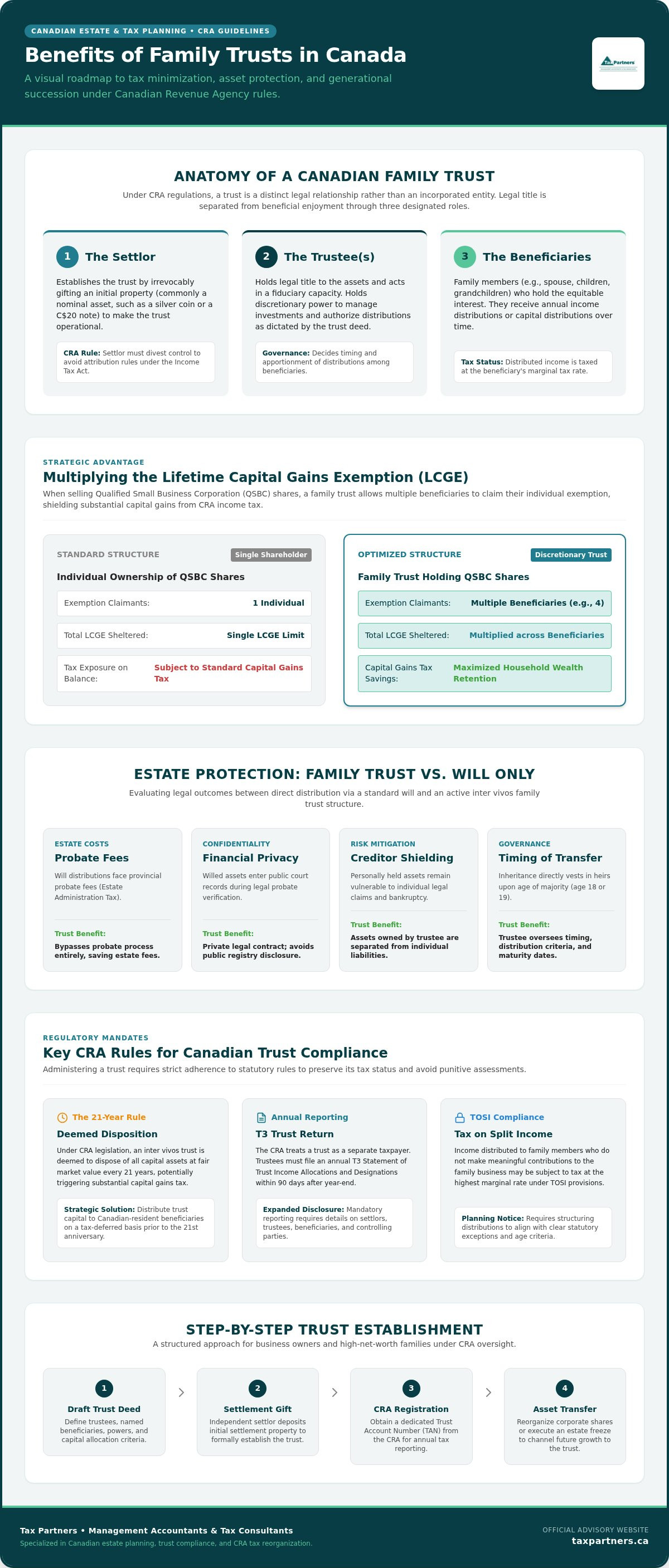
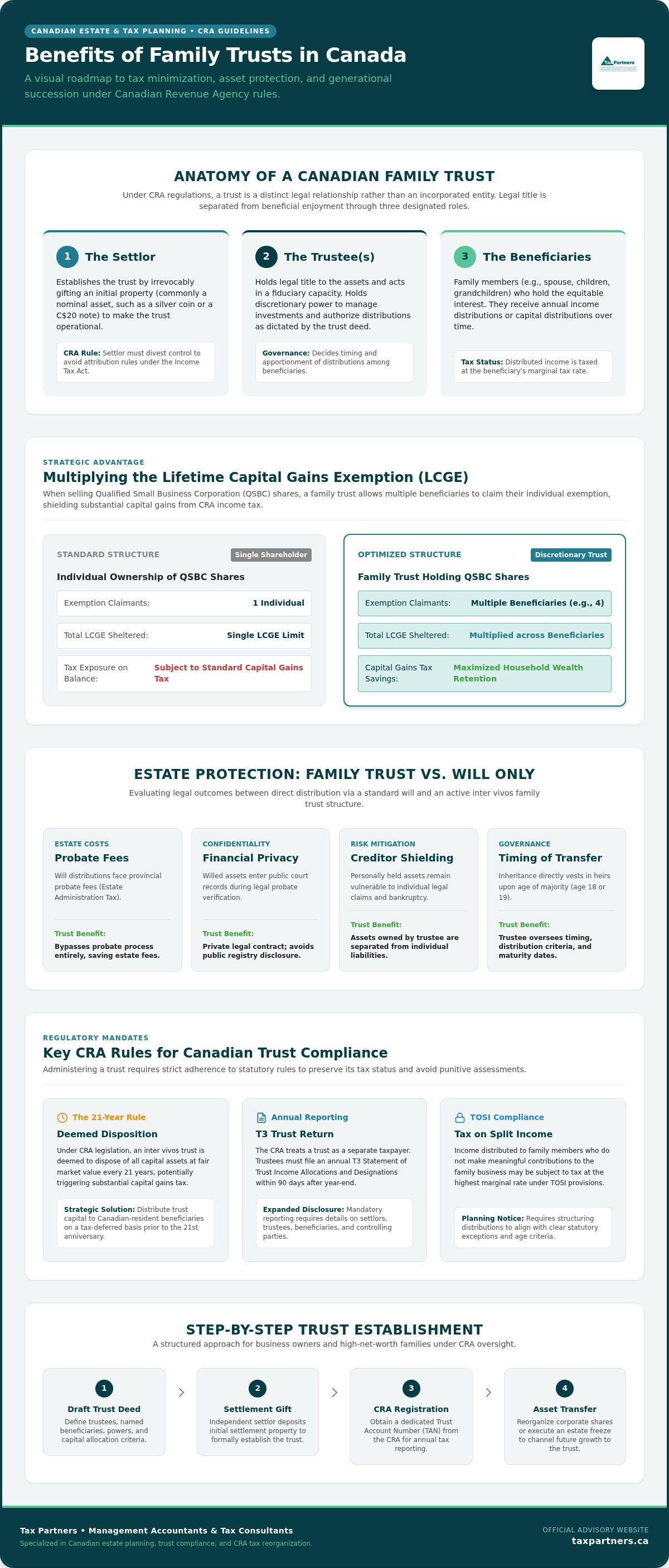
A family trust isn't a physical entity or a corporation; it's a sophisticated legal relationship. Under CRA rules, this arrangement occurs when an individual transfers assets to a trustee to hold for the benefit of others. One of the primary benefits of family trusts in Canada is the ability to separate the legal ownership of assets from the actual enjoyment of their value, providing a layer of control that simple ownership can't match.
Three specific roles define every Canadian trust:
- The Settlor: This is the individual who establishes the trust by gifting an initial asset, often a silver coin or a C$20 bill, to the trustee.
- The Trustee: They act as the legal owners, responsible for managing the trust’s assets and making distribution decisions based on the trust deed.
- The Beneficiary: These are the family members, such as children or a spouse, who ultimately receive income or capital from the trust.
For tax purposes, the CRA treats a trust as a separate taxpayer. This means the trust must obtain its own tax identification number and file an annual return, even if it distributes all its income to beneficiaries. You might choose an inter vivos trust, which is a "living trust" established during your lifetime, or a testamentary trust, which is created through your will upon your passing. Understanding the specific benefits of family trusts in Canada helps you decide which path best aligns with your long-term wealth goals.
The Legal Foundation of Canadian Trusts
Every successful trust relies on a bespoke trust deed. This document acts as the constitution for your assets, outlining exactly how the trustee should manage and distribute funds. Many families opt for discretionary trusts because they offer maximum flexibility. In these structures, the trustee has the power to decide how much income each beneficiary receives each year, allowing for precise tax planning. Choosing a professional or neutral trustee often provides a steady hand, ensuring that your long-term goals aren't compromised by family conflicts.
Why Families Choose Trusts Over Simple Wills
While a will only takes effect after you pass away, a trust can begin protecting your family immediately. This proactive approach is a cornerstone of estate income tax planning. Trusts allow for the continuous management of assets without the delays and public scrutiny associated with the probate process, which is the legal validation of a will. They also serve as a vital safeguard for vulnerable or minor beneficiaries. Instead of a child receiving a large inheritance at age 18, a trust ensures funds are managed responsibly until they reach a more mature age.
Maximizing Tax Efficiency and LCGE Multiplication
One of the most compelling benefits of family trusts in Canada is the ability to lower the overall tax bill for your household. By holding assets within a trust, you gain the flexibility to allocate income and capital gains to beneficiaries in lower tax brackets. This strategy ensures that more of your family's collective wealth stays in your hands rather than being lost to high personal tax rates.
Tax deferral is another powerful tool available through this structure. By using a corporate beneficiary, often called a "bucket company," you can flow income from the trust into a corporation taxed at lower small business rates. This approach allows you to reinvest those funds and grow your family's portfolio more aggressively before personal taxes are eventually triggered.
Multiplying the Lifetime Capital Gains Exemption
If you own a qualified small business corporation (QSBC), a family trust can save your family millions in taxes upon a sale. Under CRA rules, the Lifetime Capital Gains Exemption (LCGE) is available to every individual resident in Canada. When your trust sells these shares, it can allocate the gain among several family members, allowing each person to use their own LCGE limit to offset the tax.
This multiplication effect turns a single exemption into a powerful multi-generational tax shield. However, the CRA maintains strict eligibility criteria for QSBC shares, including asset tests and holding period requirements. You should follow the official CRA trust reporting guidelines to ensure your trust remains compliant throughout this process.
Strategic Income Allocation Post-TOSI
The Tax on Split Income (TOSI) rules, introduced to limit aggressive income splitting, have changed how trusts distribute dividends to family members. These rules can apply the highest marginal tax rate to income received by certain family members unless they meet specific "reasonableness" tests. These tests often look at the individual's labour or capital contribution to the business.
While TOSI has restricted dividend splitting, trusts remain highly effective for allocating capital gains. Generally, capital gains realized on the sale of business shares aren't subject to the same TOSI restrictions as regular dividends. This distinction makes the trust an essential vehicle for families planning a future exit and seeking the long-term benefits of family trusts in Canada. If you're unsure how these rules apply to your specific situation, it's wise to speak with a tax professional to review your distribution strategy.
Strengthening Asset Protection and Financial Privacy
While the tax efficiency discussed previously is a major draw, the structural security of a trust provides an equally vital layer of defense. One of the primary benefits of family trusts in Canada is the robust barrier they create between your personal liabilities and your family's wealth. By transferring legal title of your assets to a trustee, those assets generally cease to be part of your personal estate, making them much harder for personal creditors to reach.
This protection is essential for business owners who want to ensure their family's future isn't compromised by business risks. It's about more than just tax; it's about building a fortress around your legacy. Integrating a trust into your strategic wealth management and financial planning ensures that your hard-earned capital remains exactly where it belongs: with your family.
Safeguarding Assets from Creditors and Claims
Transferring assets to a trust means you no longer personally own them. This shift is particularly beneficial for professionals in high-risk sectors, such as medicine or real estate development, where the threat of personal litigation is a constant reality. If a lawsuit arises against you personally, the assets held within the trust are typically shielded because they aren't your legal property.
There are, however, ethical and legal boundaries to this protection. Under "fraudulent conveyance" rules, you cannot move assets into a trust specifically to hide them from existing creditors or known legal claims. Trusts also offer a strategic advantage during matrimonial disputes. By holding family business shares in a trust, you can often protect the core business from being dismantled or liquidated during a divorce settlement, depending on how the trust deed is structured.
Maintaining Privacy and Avoiding Probate Fees
When an individual passes away in Canada, their will typically goes through probate, a court-led process to validate the document. This process is not only slow but also public, meaning anyone can view the details of your assets and who is receiving them. Trust assets bypass probate entirely because the trust continues to exist regardless of the settlor's death.
This bypass offers two distinct advantages:
- Cost Savings: You avoid provincial probate taxes, which can be significant depending on the size of your estate.
- Confidentiality: Trust distributions remain a private matter between the trustee and the beneficiaries, keeping your financial affairs out of the public record.
For a detailed look at how the CRA views these distributions and the associated reporting requirements, the CRA T3 Trust Guide provides comprehensive technical oversight. By maintaining this level of privacy, you ensure a seamless and quiet transition of wealth to the next generation.
Navigating the 21-Year Rule and CRA Compliance
Maintaining the structural integrity of your trust requires a commitment to rigorous annual compliance. While the benefits of family trusts in Canada are substantial, they depend entirely on your ability to meet the CRA's evolving reporting standards. Precision in your documentation ensures that your family's wealth remains protected from unnecessary audits or penalties.
Trustees must act as proactive guardians of the trust's legal status. This involves more than just filing paperwork; it requires a deep understanding of how the Income Tax Act applies to your specific trust deed. By staying ahead of deadlines, you preserve the long-term viability of your estate plan.
Preparing for the 21-Year Deemed Disposition
The 21-year rule is a critical tax provision where the CRA treats trust assets as if they were sold at fair market value every 21 years. This "deemed disposition" can trigger a significant tax bill on unrealized capital gains, potentially forcing the sale of family assets to cover the cost. Planning for this milestone should begin years in advance to avoid a liquidity crisis.
One common strategy involves distributing the trust's assets to beneficiaries before the 21st anniversary occurs. If structured correctly, this allows the tax liability to be deferred until the beneficiaries eventually sell the assets themselves. A CPA is essential during this phase to provide accurate valuations and ensure the distribution aligns with CRA corporate tax and trust regulations.
Annual Filing and Disclosure Obligations
Every year, trustees are responsible for filing the T3 Trust Income Tax and Information Return. This filing reports the trust's income, capital gains, and the specific amounts allocated to beneficiaries. Missing these deadlines can lead to compounding interest and penalties that diminish the trust's overall value.
Recent CRA changes have introduced Schedule 15, which demands a higher level of transparency regarding beneficial ownership. You must now disclose the names, addresses, and tax identification numbers for all settlors, trustees, and beneficiaries. These rules are designed to prevent tax evasion, and even "bare trusts" that were previously exempt may now face these requirements.
The penalties for non-compliance with these new disclosure rules are particularly severe. Inaccurate reporting or failing to file can result in fines that are calculated based on the highest value of the trust's assets during the year. To ensure your trust meets every current standard, contact our compliance team for professional guidance on your annual filings.
Implementing Your Family Trust with Professional Oversight
Establishing a trust is a significant milestone, but its success depends entirely on the quality of its implementation. While generic templates might seem convenient, they often fail to address the unique complexities of your family’s financial situation. A bespoke trust deed is essential to ensure that the benefits of family trusts in Canada are fully realized and legally defensible.
This process requires a seamless collaboration between your legal counsel and your Tax Partners CPA. While a lawyer ensures the trust is legally sound, our team focuses on aligning the structure with your broader corporate income tax strategy. This dual approach prevents the common pitfalls that lead to CRA disputes or unintended tax liabilities.
Many high-net-worth families benefit from a Family Office approach, which provides a centralized hub for managing all aspects of wealth. Our family office services integrate tax planning, compliance, and wealth management into a single, cohesive strategy. This ensures that every decision made within the trust supports your long-term legacy and family goals.
The Critical Role of Custom Tax Planning
Custom tax planning ensures that your trust doesn't operate in a vacuum. We align your trust distributions with your corporate earnings to maximize tax deferral and minimize the impact of the TOSI rules mentioned earlier. Regular trust check-ups are a cornerstone of our proactive guardianship, allowing us to adapt your plan as CRA regulations evolve.
These reviews are particularly vital given the recent introduction of enhanced disclosure requirements like Schedule 15. We meticulously analyze your trust’s activity to ensure every transaction is documented and every beneficial owner is correctly reported. This level of precision is what differentiates a standard trust from a robust, multi-generational wealth vehicle.
Securing Your Legacy with Expert Guidance
Professional oversight is your best defense against the stress of a CRA audit. When your records are organized and your strategy is backed by 40 years of institutional wisdom, you can move forward with total confidence. We act as a steady hand at the helm, ensuring that your wealth transfer remains private and efficient.
Proactive management means looking beyond the current tax year to anticipate future challenges, such as the 21-year rule or changes in capital gains legislation. By choosing a partner who is deeply invested in your success, you secure a better outcome for your heirs. If you're ready to explore the benefits of family trusts in Canada for your specific situation, book a consultation with our team today to start building your bespoke legacy plan.
Secure Your Family Legacy Today
Trusts offer more than just simple tax savings; they provide a structural fortress for your hard-earned assets. By leveraging the benefits of family trusts in Canada, you can effectively multiply tax exemptions and shield your wealth from personal liabilities or creditor claims. This proactive approach ensures a private, efficient transfer of capital to the next generation while maintaining full compliance with evolving CRA reporting standards.
With over 40 years of Canadian tax expertise, Tax Partners specializes in strategic estate and succession planning. We provide comprehensive CRA audit and compliance support to help you navigate complex rules like the 21-year deemed disposition and the new Schedule 15 disclosures. Our team acts as a steady hand at the helm, helping you organize your affairs to achieve long-term stability and peace of mind.
Secure your family's future; contact Tax Partners for expert trust planning today.
You don't have to face these regulatory complexities alone. We're here to help you realize your vision for a secure and prosperous family legacy that stands the test of time.
Frequently Asked Questions
What is a family trust and how does it work in Canada?
A family trust is a legal arrangement where a settlor transfers assets to a trustee to manage for the benefit of family members. In Canada, this structure separates legal ownership from the actual enjoyment of wealth. It works by having the trustee follow the rules set out in a trust deed, ensuring that assets are distributed according to your specific goals. This provides a flexible framework for long-term wealth preservation.
Can a family trust reduce my annual income tax under CRA rules?
Yes, one of the primary benefits of family trusts in Canada is the potential for significant tax reduction through income allocation. By distributing income or capital gains to family members in lower tax brackets, you can lower the overall family-wide tax burden. While the CRA's TOSI rules have restricted some splitting options, trusts remain highly effective for multiplying the Lifetime Capital Gains Exemption and managing capital gains tax efficiently.
What are the costs associated with setting up and maintaining a trust?
Setting up a trust involves initial legal fees for the trust deed and CPA fees for structural planning. Ongoing costs include the preparation of annual T3 returns and bookkeeping to track all transactions. While these expenses vary based on complexity, they're often outweighed by the tax savings and asset protection benefits. You should consult with a professional to understand the specific costs for your family's unique situation.
How does the 21-year rule affect my family trust's assets?
The 21-year rule causes a deemed disposition, where the CRA treats the trust's assets as if they were sold at fair market value. This can trigger a substantial tax bill on any unrealized capital gains within the trust. To manage this, families often distribute the assets to beneficiaries before the 21st anniversary. This strategy allows the tax liability to be deferred until the beneficiary eventually sells the assets.
Can a family trust protect my assets from a divorce or lawsuit?
Assets held in a trust are generally shielded from personal lawsuits and creditor claims because the individual no longer legally owns those assets. This protection can also extend to matrimonial disputes, potentially safeguarding a family business from being liquidated during a divorce. However, these protections must be established proactively. You cannot use a trust to hide assets from existing creditors under Canadian fraudulent conveyance laws.
What are the new CRA reporting requirements for trusts in 2026?
For 2026, the CRA requires enhanced transparency through Schedule 15 beneficial ownership reporting. Trustees must now disclose the names, addresses, and tax identification numbers for all settlors, trustees, and beneficiaries. These rules even apply to many bare trusts that were previously exempt from filing. Failing to provide this detailed information can result in significant penalties based on the highest fair market value of the trust's assets.
Is a family trust better than a corporation for holding investments?
Choosing between a trust and a corporation depends on your specific financial objectives. Corporations are excellent for deferring tax on active business income, while trusts offer superior flexibility for distributing wealth and multiplying tax exemptions. Many successful Canadian families use a hybrid structure where a trust holds shares in an operating corporation. This combination allows you to benefit from both corporate tax rates and trust distribution flexibility.
Who should I choose as a trustee for my family trust?
Selecting a trustee is a critical decision because they hold a fiduciary duty to act in the best interests of the beneficiaries. You might choose a trusted family member, a close friend, or a professional advisor like a CPA or lawyer. It's often beneficial to appoint someone neutral or professional to minimize potential family conflicts. The right trustee provides a steady hand, ensuring your legacy is managed ethically and according to your wishes.

Article by
Mahad Mohamed
Mahad Mohamed is an accountant and the CEO of Tax Partners, with over 26+ years of Canadian and international tax and accounting experience. His expertise includes corporate reorganization, cross-border tax structuring (Canada & US), tax disputes, CRA audits, and tax planning for small owner-managed private corporations. Most recently, Mahad is a pioneer in Canadian crypto taxation and founded Block3 Finance.
Previously, Mahad worked for the Canada Revenue Agency (CRA), Big4 accounting firms, and served as a Rulings Officer for the Federal Tax Authority of the UAE before acquiring Tax Partners in 2014.
Tax Partners has 44 full-time accountants and over 18,400+ clients.
Disclaimer
This article provides general information only and is current as of its publication date. It has not been updated and may be out of date. It does not constitute legal advice and should not be relied upon as such. Every tax situation is unique and may differ from the examples discussed in this article. If you have specific questions, you should seek the advice of our accountants for your unique circumstances. Book a FREE Initial Consultation Today!
Frequently Asked Questions
What is a family trust and how does it work in Canada?
A family trust is a legal arrangement where a settlor transfers assets to a trustee to manage for the benefit of family members. In Canada, this structure separates legal ownership from the actual enjoyment of wealth. It works by having the trustee follow the rules set out in a trust deed, ensuring that assets are distributed according to your specific goals. This provides a flexible framework for long-term wealth preservation.
Can a family trust reduce my annual income tax under CRA rules?
Yes, one of the primary benefits of family trusts in Canada is the potential for significant tax reduction through income allocation. By distributing income or capital gains to family members in lower tax brackets, you can lower the overall family-wide tax burden. While the CRA's TOSI rules have restricted some splitting options, trusts remain highly effective for multiplying the Lifetime Capital Gains Exemption and managing capital gains tax efficiently.
What are the costs associated with setting up and maintaining a trust?
Setting up a trust involves initial legal fees for the trust deed and CPA fees for structural planning. Ongoing costs include the preparation of annual T3 returns and bookkeeping to track all transactions. While these expenses vary based on complexity, they're often outweighed by the tax savings and asset protection benefits. You should consult with a professional to understand the specific costs for your family's unique situation.
How does the 21-year rule affect my family trust's assets?
The 21-year rule causes a deemed disposition, where the CRA treats the trust's assets as if they were sold at fair market value. This can trigger a substantial tax bill on any unrealized capital gains within the trust. To manage this, families often distribute the assets to beneficiaries before the 21st anniversary. This strategy allows the tax liability to be deferred until the beneficiary eventually sells the assets.
Can a family trust protect my assets from a divorce or lawsuit?
Assets held in a trust are generally shielded from personal lawsuits and creditor claims because the individual no longer legally owns those assets. This protection can also extend to matrimonial disputes, potentially safeguarding a family business from being liquidated during a divorce. However, these protections must be established proactively. You cannot use a trust to hide assets from existing creditors under Canadian fraudulent conveyance laws.
What are the new CRA reporting requirements for trusts in 2026?
For 2026, the CRA requires enhanced transparency through Schedule 15 beneficial ownership reporting. Trustees must now disclose the names, addresses, and tax identification numbers for all settlors, trustees, and beneficiaries. These rules even apply to many bare trusts that were previously exempt from filing. Failing to provide this detailed information can result in significant penalties based on the highest fair market value of the trust's assets.
Is a family trust better than a corporation for holding investments?
Choosing between a trust and a corporation depends on your specific financial objectives. Corporations are excellent for deferring tax on active business income, while trusts offer superior flexibility for distributing wealth and multiplying tax exemptions. Many successful Canadian families use a hybrid structure where a trust holds shares in an operating corporation. This combination allows you to benefit from both corporate tax rates and trust distribution flexibility.
Who should I choose as a trustee for my family trust?
Selecting a trustee is a critical decision because they hold a fiduciary duty to act in the best interests of the beneficiaries. You might choose a trusted family member, a close friend, or a professional advisor like a CPA or lawyer. It's often beneficial to appoint someone neutral or professional to minimize potential family conflicts. The right trustee provides a steady hand, ensuring your legacy is managed ethically and according to your wishes.