What cash flow management covers, from payments to working capital

A business can be profitable on paper and still struggle to pay its bills on time. Cash flow management means tracking the cash and cash equivalents moving into and out of the business, then planning how to meet obligations and support future needs. Effective cash flow management strategies include monitoring inflows and outflows weekly or monthly and using a 13-week projection to anticipate potential shortfalls.
It’s easy to focus on sales and profit, but timing matters too: customer payments may arrive after supplier bills are due. A clear view of incoming and outgoing cash helps you spot that gap early and make informed financial decisions.
This article explains how payment processes, receivables, payables, and working capital fit together, and what operating, investing, and financing cash flows reveal about a business. You’ll learn how these pieces support a steadier financial strategy, from day-to-day planning to longer-term decisions.
Key Takeaways
- Compare best-case, expected-case and downside forecasts to see how changing sales or collections could affect available cash.
- Review payment timing and processing to make incoming funds easier to anticipate and outgoing payments easier to plan.
- Improve the order-to-cash process by invoicing promptly, following up on overdue accounts and coordinating supplier payments.
- Use operating, investing and financing categories to understand what is driving cash movement and where funds are going.
- Monitor working capital alongside cash flow to spot pressure on day-to-day operations and make more informed business decisions.
1. What is cash flow management and why is it important in finance strategy?
Cash flow management tracks cash and cash equivalents moving into and out of a business. Positive cash flow means receipts exceed spending over the period measured. A business can report a profit yet lack the funds to pay bills if customer payments arrive after payroll, supplier invoices, or planned purchases are due. Tracking these movements helps owners identify timing gaps and assess financial health through effective cash flow management strategies.
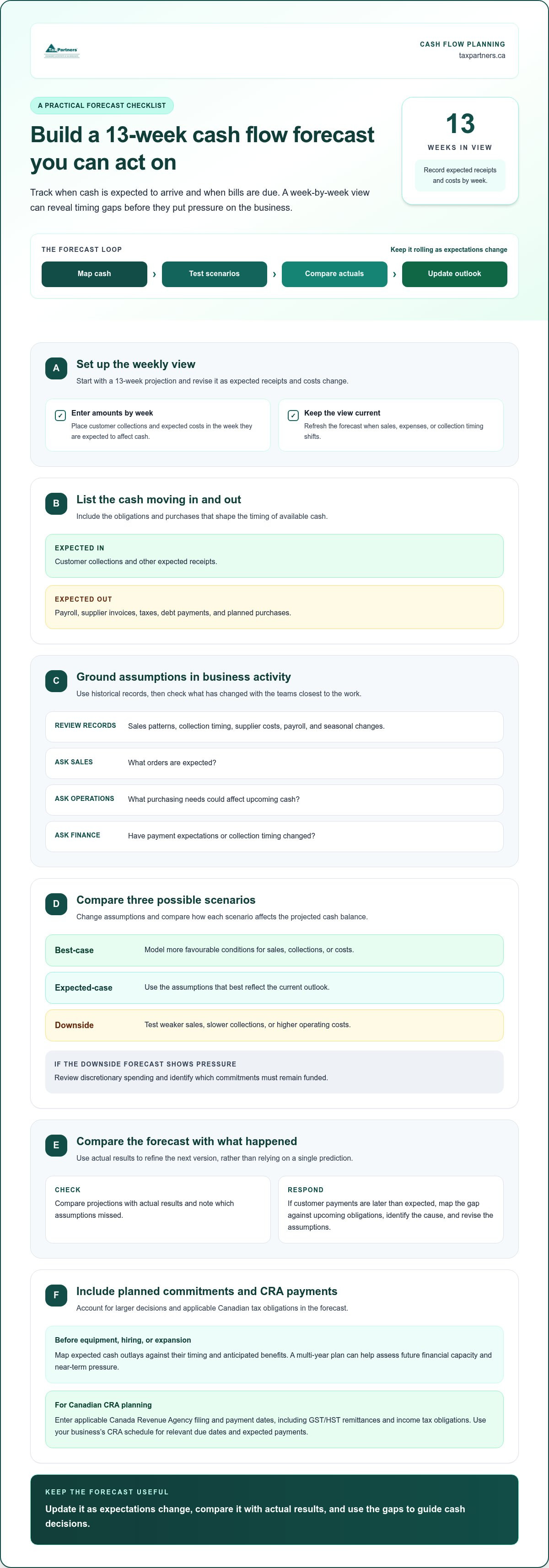
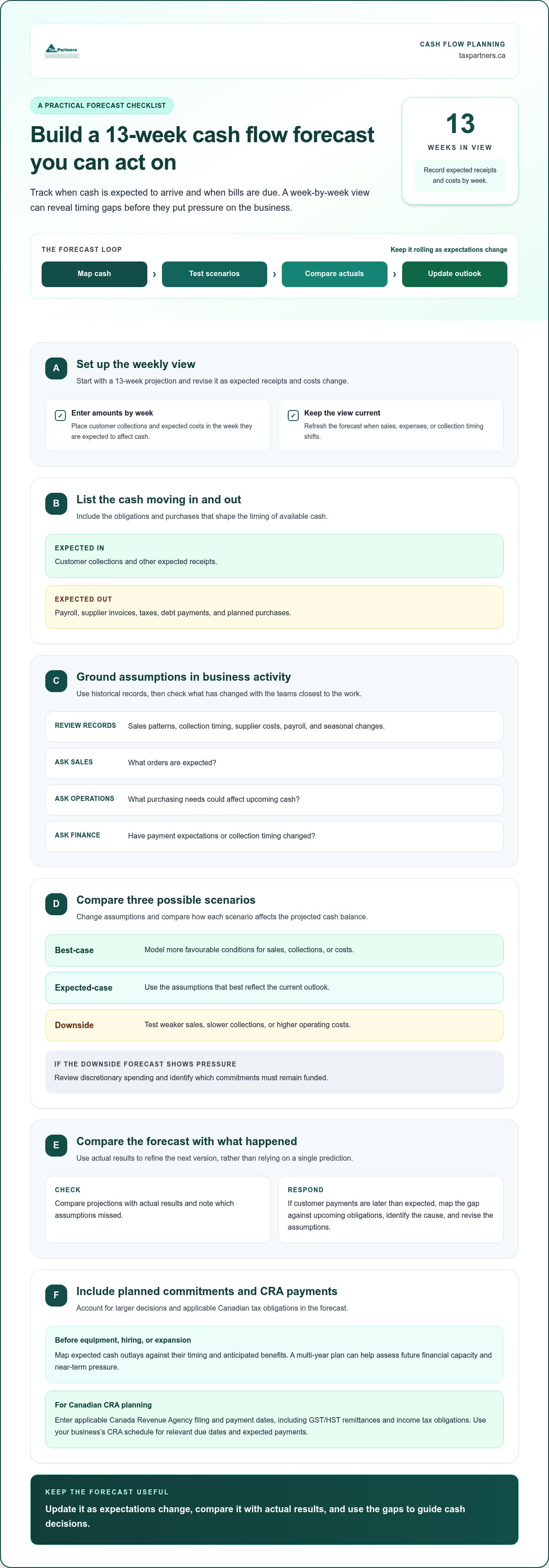
Begin with a 13-week cash flow projection, then update it as expected receipts and costs change. Record customer collections, payroll, supplier invoices, taxes, debt payments, and planned purchases by week. Compare projections with actual results to identify assumptions that missed. A rolling forecast keeps upcoming cash requirements visible as sales, expenses, and collection timing shift.
Use historical records to ground your assumptions. Review sales patterns, collection timing, supplier costs, payroll, and seasonal changes, then ask relevant teams what has changed. Sales can share expected orders, operations can flag purchasing needs, and finance can update payment expectations. Combining these inputs helps the forecast reflect business activity, not just accounting entries.
Scenario planning tests how different conditions could affect cash availability. Model best-case, expected, and downside scenarios. Adjust assumptions such as sales volume, collection timing, or operating costs, then compare the projected balance. If the downside scenario shows pressure, decide which discretionary spending to review and which commitments must remain funded.
For example, if a forecast shows customer payments arriving later than expected, map the resulting gap against upcoming obligations. Identify the cause, such as slower collections or a change in expected sales, and revise the relevant assumptions. This turns forecasting into a decision-making process, helping owners assess opportunities without relying on a single prediction.
Forecasting also informs capital requirements. Before committing to equipment, hiring, or expansion, map expected cash outlays against their timing and anticipated benefits. A multi-year plan can help assess whether a growth initiative supports future financial capacity or creates near-term pressure. Businesses involved in portfolio planning can connect forecasts with asset management considerations.
Which Canadian tax and GST/HST deadlines should businesses include in cash flow planning? Include applicable Canada Revenue Agency filing and payment dates, including GST/HST (goods and services tax and harmonized sales tax) remittances and income tax obligations. Use your business’s CRA schedule to enter relevant due dates and expected payments in the forecast.
Budgeting can reveal seasonal effects, potential shortfalls, and possible surpluses, according to financial analysts. Use those patterns to adjust inventory, staffing, or marketing before demand shifts. Reviewing assumptions regularly helps owners make timely decisions about cash reserves, planned commitments, and growth opportunities.
2. Payment automation and incoming payment solutions
Automating payment steps can reduce manual work and make cash movements easier to track. Map invoice approval, payment authorization, and reconciliation, then identify repetitive tasks that software can handle. Keep clear approval controls so automation supports accurate processing rather than simply moving errors faster.
Make it straightforward for customers to pay. Offering options such as credit cards, debit cards, cheques, mobile payments, and bank transfers can accommodate different preferences. A 2022 survey found that 75% of respondents said paying major suppliers electronically positively affected their businesses, showing how digital payment processes can support operations.
Customer payment terms affect when sales become available cash. State due dates clearly on invoices, send invoices promptly, and set a reminder to follow up on overdue accounts. A reminder at 15 days can prompt earlier follow-up. If customers need flexible payment options, weigh the expected collection timing against the business’s own upcoming obligations.
Plan supplier payments around agreed terms and available cash, not simply the day an invoice arrives. Grouping bill payments on a schedule, such as twice a month, can make outflows more predictable. Use the full net 30 or net 45 term where offered, while paying on time and preserving reliable relationships with suppliers.
Compare customer and vendor terms for timing gaps. According to BDC, a business that pays vendors within 30 days but gives customers 90 days to pay can put pressure on cash flow. Review the difference between those collection and payment windows, then consider negotiating terms, improving collections, or adjusting purchasing plans.
Inventory decisions also affect payment needs. Stock purchased well before a sale ties up cash until the goods move and customers pay. Review inventory levels alongside expected demand and supplier terms, then coordinate orders to avoid excess stock without disrupting customer commitments.
Strong supplier relationships can make practical discussions about payment timing, early-payment discounts, or shared inventory arrangements easier. Seek terms that work for both parties, and weigh any discount against the value of keeping cash available for payroll, operating costs, or essential purchases. The goal is sustainable profitability, not delaying payments at the expense of trust.
Build safeguards into digital processes. According to the 2023 AFP Payments Fraud and Control Survey, 65% of businesses experienced payment fraud attacks or attempts in 2022. Use defined authorization steps and review unusual payment requests before releasing funds. If payment records, bookkeeping, and payroll timing need closer coordination, discuss bookkeeping and payroll support.
3. Accounts receivable, accounts payable, and order-to-cash processes
Order-to-cash covers the steps from accepting a customer order through invoicing and collecting payment. Delays at any stage keep a completed sale from becoming available cash. Map each handoff, from order approval to payment application, to find where invoices stall or collection follow-up is missed.
Accounts receivable (AR) tracks money customers owe; accounts payable (AP) tracks bills the business owes suppliers. Days Sales Outstanding (DSO) estimates how long customer invoices remain unpaid, on average. Review DSO alongside overdue invoices and payment patterns, then identify whether late billing, disputed charges, or slow follow-up is holding cash back.
Make invoices accurate and prompt. Confirm prices, quantities, delivery details, and payment terms before sending them, then record the due date and follow-up action. An early-payment discount, such as 2% for payment within 10 days, can encourage faster collection. Assess whether the value of earlier cash outweighs the discount’s effect on profitability.
Keep collection practices consistent and respectful. Send a reminder before or shortly after an invoice becomes overdue, clarify any dispute, and agree on a realistic payment date. For customers receiving credit, review their payment history and set terms that reflect the relationship and your business’s exposure. Clear, timely communication can support collections without needlessly straining customer relationships.
Plan AP alongside AR, not in isolation. Compare expected collection dates with supplier due dates, payroll, and other commitments. Process invoices promptly, verify them against purchase records, and schedule approved payments according to their terms. This helps avoid missed obligations and makes cash requirements visible to decision-makers. Similar coordination between incoming collections and vendor contracts is essential in property governance, where providers like My Florida HOA Manager help community boards maintain balanced cash flow and dependable operations.
Accounting software, a cash planner, or a dashboard can bring these accounts together. Track invoice dates, due dates, receipts, overdue balances, and upcoming bills in one reporting routine. Review exceptions with the people responsible for sales, service delivery, and purchasing. Their updates can explain changes that ledger entries alone may not reveal.
A 45-day cash flow cycle can turn over nine times in a year. Shortening the time between delivery, invoicing, and collection can release funds sooner, while managing inventory and supplier payments affects how long cash stays committed. Track DSO and the full cycle together to see whether growth is creating a working-capital squeeze.
To reduce expenses and speed up customer payments, review recurring costs, remove non-essential spending, invoice as soon as work is delivered, and follow up on overdue accounts. Consider early-payment discounts, but weigh the discount against the benefit of receiving funds sooner.
4. Operating, investing, and financing cash flow
A cash flow statement groups business cash movements into operating, investing, and financing activities. This separation helps explain whether core work supports daily expenses, purchases consume available capital, or borrowing and repayments affect liquidity. Read the categories together to understand what is driving the cash balance, not just whether it rose or fell.
Operating cash flow reflects cash received from customers and cash spent to run the business. For a manufacturer, this can include product sales, raw materials, worker wages, and other operating expenses. If operating cash flow remains negative, examine collections, supplier costs, payroll, and production efficiency to locate pressure on working capital.
Investing cash flow records spending on longer-term assets and proceeds from their sale. Equipment, technology, and infrastructure purchases use cash now while potentially supporting future operations. Financing cash flow captures transactions such as borrowing, repaying debt, or issuing shares. Separating these movements helps owners distinguish an operating shortfall from a planned capital investment or financing decision.
Review cash flow statements alongside financial reports to assess working capital needs and allocate funds. A monthly review can compare operating results with expected receipts, supplier payments, taxes, repairs, and planned capital expenditures. If cash is tightening, identify essential outflows, purchases that can be rescheduled, and whether expected revenue will arrive in time.
ERP systems can bring operational and financial information together, giving manufacturers timely data to improve cash flow predictions. Accurate reporting still depends on sound inputs and interpretation. Managers need to understand how delayed collections, rising costs, or new equipment purchases affect liquidity, then use that insight to adjust plans.
Depreciation allocates an asset’s cost over time for financial reporting and planning. It can help managers understand how equipment costs affect reported results, but it doesn’t put cash into the business or resolve a short-term liquidity gap. When assessing a purchase, pair depreciation analysis with actual payment dates and forecast cash movements.
For a temporary cash gap, Canadian businesses may consider a credit line, invoice financing, or leasing, depending on the cause and timing of the shortfall. Compare financing costs, repayment structure, fees, and the effect on future cash commitments. The actual cost depends on the facility and the business’s circumstances. Meanwhile, for owners managing personal liquidity alongside their business ventures, credit brokers like I Need Cash help match borrowers with personal and homeowner loan options.
Use a practical sequence: classify each cash movement, review operating performance, then assess investment and financing needs. This prevents financing from masking an operational issue and helps owners decide whether to preserve working capital, fund an asset, or change spending plans.
5. Importance of managing small-business cash flow
For a small business, cash on hand determines whether it can pay staff, suppliers, rent, and other expenses as they fall due. Profit alone doesn’t show whether customer payments will arrive in time. Reviewing cash balances against upcoming outflows helps owners protect day-to-day operations and decide when investments are affordable.
Working capital, the difference between current assets and current liabilities, offers another view of operating capacity. Compare cash, receivables, and inventory with bills and other short-term obligations. If receivables rise while cash falls, for example, investigate collection delays before committing to new spending.
Small businesses often have fewer revenue sources and less room to absorb a delayed payment, so forecasts should reflect actual customer and supplier terms. Seasonal businesses should map busy and quiet periods separately, adjusting inventory, staffing, and marketing to expected demand. A retailer preparing for a seasonal peak, for instance, may need cash for stock before sales arrive.
Cash shortages can interrupt operations, delay payments, and force businesses to postpone planned investments. An early warning is a projected balance that cannot cover scheduled outflows, such as payroll, supplier invoices, or taxes. Another is a growing gap between recorded sales and customer payments received.
Review these signals regularly: compare actual receipts with expected inflows, list bills by due date, and update assumptions when orders or collections change. If the forecast shows a shortfall, identify its cause first. A late customer payment calls for follow-up; a recurring expense gap may require spending changes.
Small-business cash planning also supports measured growth. Before hiring, expanding inventory, or buying equipment, compare the upfront cash requirement with the timing of expected benefits. A project may strengthen future revenue yet still strain current liquidity if costs arrive well before customer payments.
Scenario planning helps owners prepare for uncertainty without treating any forecast as certain. Test how slower sales, delayed collections, or higher supplier costs would affect the balance. Then identify which discretionary expenses could be adjusted, which commitments must continue, and when management should revisit the plan.
The consequences of weak planning extend beyond commercial businesses. According to Európai Unió, several NGOs closed after miscalculating income against expenses and being unable to deliver promised activities. For any small organization, matching planned commitments to realistic receipts helps protect both operations and the people who rely on them.
Make cash visibility part of routine decision-making: assign responsibility for updating projections, review actual results, and act on warning signs early. If cash planning needs to connect with broader business goals, discuss financial planning support.
Tax Partners: Canadian Accounting & Tax Services
Tax Partners can support business owners who need reliable financial records to inform cash flow decisions. Canadian Accounting & Tax Services, along with Bookkeeping and Payroll Services, can help organize information about receivables, expenses, payroll, and tax obligations.
Turn to accounting support when records are difficult to keep current or changing costs and collections make your financial position harder to see. For owners connecting business decisions with longer-term personal goals, Wealth Management & Financial Planning may also be relevant. Cross-border activity can call for US & Cross-Border Accounting & Tax Services.
Clear records make it easier to review cash movements and plan upcoming commitments. Contact Tax Partners for a free initial consultation about accounting and financial support for your business.
Make cash insight part of every decision
The next step is to make financial visibility a management habit. Decide who updates the forecast, how often leaders review it, and which changes require action. A useful process connects cash information to decisions about hiring, expansion, purchasing, and owner compensation, rather than treating reporting as a month-end task.
Set practical decision triggers that fit your business. A change in expected collections, for example, could prompt a review of discretionary spending, while a sustained surplus might lead to a fresh look at planned investments. The right cash flow management strategies help leaders respond deliberately, without relying on a single snapshot or assumption.
Consistency matters more than complexity. Keep information current, assign clear responsibilities, and ensure decision-makers understand how their choices affect the business’s financial position. Over time, this approach can make planning a more useful part of daily leadership.
For support applying financial insight to your business, contact Tax Partners to discuss your next steps. A considered plan can help you move forward with greater clarity and confidence.
Frequently Asked Questions
What is cash flow management and why is it important in finance strategy?
Cash flow management is a decision-making discipline that connects available cash with business priorities. As part of a financial strategy, it helps owners decide which commitments to fund, which risks need a contingency plan, and how much flexibility to preserve. Before launching a new service, for example, management can assess whether available cash can cover setup costs without undermining essential operations or other strategic priorities.
How does accounts payable affect cash flow, and vice versa?
Accounts payable affects cash flow through the timing and accuracy of recorded obligations. If a supplier invoice is missing from the books, the reported cash position may appear stronger than it is. Limited cash can also force difficult choices among due obligations. Matching purchase orders, delivery records, and invoices helps identify errors or duplicates before they distort planning or cause avoidable payment issues.
What is cash flow management and why is it important for businesses?
Cash flow management is how a business oversees cash availability and uses that information to guide operations. Its value goes beyond paying current bills: a clear view can help owners decide whether to retain funds for uncertainty, support a strategic project, or distribute available cash. Reviewing these choices alongside business objectives helps prevent short-term decisions from undermining longer-term plans.
What are the best strategies to improve business cash flow?
Find the source of cash pressure in the records rather than making broad cuts. Compare purchasing commitments with sales margins, review recurring costs for items that no longer support operations, and check whether one customer or product dominates revenue. These checks can reveal whether the priority is reducing avoidable spending, adjusting the business mix, or protecting against dependence on a narrow source of income.
How can businesses create an accurate cash flow forecast?
Assign an owner to each forecast input and record its basis. Distinguish an executed customer contract from a sales estimate, for example, and use the expected settlement date rather than the invoice date for cash receipts. Include the opening bank position and account for transactions initiated but not yet cleared. This makes the forecast more useful for decisions based on cash actually available.
What payment terms and invoice practices improve cash flow?
Make invoices easy for the customer’s finance team to process. Include the agreed purchase order reference, a clear description of the work or goods, the correct billing contact, and any required acceptance details. For projects, milestone billing can link invoices to completed stages instead of waiting until the entire project ends. Clear documentation can also reduce administrative disputes that delay payment.
How can businesses manage accounts payable without damaging supplier relationships?
Build a dependable AP process that treats suppliers consistently. Maintain accurate vendor records, set clear internal approval responsibilities, and reconcile supplier statements against recorded invoices so omissions surface early. Document how to handle disputed charges, separating the amount in question from undisputed obligations. Predictable administration makes issues easier to resolve professionally and supports suppliers’ confidence in the business’s processes.

Article by
Mahad Mohamed
Mahad Mohamed is an accountant and the CEO of Tax Partners, with over 26+ years of Canadian and international tax and accounting experience. His expertise includes corporate reorganization, cross-border tax structuring (Canada & US), tax disputes, CRA audits, and tax planning for small owner-managed private corporations. Most recently, Mahad is a pioneer in Canadian crypto taxation and founded Block3 Finance.
Previously, Mahad worked for the Canada Revenue Agency (CRA), Big4 accounting firms, and served as a Rulings Officer for the Federal Tax Authority of the UAE before acquiring Tax Partners in 2014.
Tax Partners has 44 full-time accountants and over 18,400+ clients.
Disclaimer
This article provides general information only and is current as of its publication date. It has not been updated and may be out of date. It does not constitute legal advice and should not be relied upon as such. Every tax situation is unique and may differ from the examples discussed in this article. If you have specific questions, you should seek the advice of our accountants for your unique circumstances. Book a FREE Initial Consultation Today!
Frequently Asked Questions
What is cash flow management and why is it important in finance strategy?
Cash flow management is a decision-making discipline that connects available cash with business priorities. As part of a financial strategy, it helps owners decide which commitments to fund, which risks need a contingency plan, and how much flexibility to preserve. Before launching a new service, for example, management can assess whether available cash can cover setup costs without undermining essential operations or other strategic priorities.
How does accounts payable affect cash flow, and vice versa?
Accounts payable affects cash flow through the timing and accuracy of recorded obligations. If a supplier invoice is missing from the books, the reported cash position may appear stronger than it is. Limited cash can also force difficult choices among due obligations. Matching purchase orders, delivery records, and invoices helps identify errors or duplicates before they distort planning or cause avoidable payment issues.
What is cash flow management and why is it important for businesses?
Cash flow management is how a business oversees cash availability and uses that information to guide operations. Its value goes beyond paying current bills: a clear view can help owners decide whether to retain funds for uncertainty, support a strategic project, or distribute available cash. Reviewing these choices alongside business objectives helps prevent short-term decisions from undermining longer-term plans.
What are the best strategies to improve business cash flow?
Find the source of cash pressure in the records rather than making broad cuts. Compare purchasing commitments with sales margins, review recurring costs for items that no longer support operations, and check whether one customer or product dominates revenue. These checks can reveal whether the priority is reducing avoidable spending, adjusting the business mix, or protecting against dependence on a narrow source of income.
How can businesses create an accurate cash flow forecast?
Assign an owner to each forecast input and record its basis. Distinguish an executed customer contract from a sales estimate, for example, and use the expected settlement date rather than the invoice date for cash receipts. Include the opening bank position and account for transactions initiated but not yet cleared. This makes the forecast more useful for decisions based on cash actually available.
What payment terms and invoice practices improve cash flow?
Make invoices easy for the customer’s finance team to process. Include the agreed purchase order reference, a clear description of the work or goods, the correct billing contact, and any required acceptance details. For projects, milestone billing can link invoices to completed stages instead of waiting until the entire project ends. Clear documentation can also reduce administrative disputes that delay payment.
How can businesses manage accounts payable without damaging supplier relationships?
Build a dependable AP process that treats suppliers consistently. Maintain accurate vendor records, set clear internal approval responsibilities, and reconcile supplier statements against recorded invoices so omissions surface early. Document how to handle disputed charges, separating the amount in question from undisputed obligations. Predictable administration makes issues easier to resolve professionally and supports suppliers’ confidence in the business’s processes.